


An eyelid lift removes or repositions excess skin, muscle, and fat to refresh tired-looking upper and lower lids. When anatomy allows, Dr. Samuel Sohn uses a fat-preserving approach whenever possible. Keeping tissue in place instead of removing it helps results look natural now and years from now. Most patients recover enough for non-strenuous activities within seven to 10 days.

Eyelid Lift (Blepharoplasty)
Is Eyelid Lift Surgery Right For Me?
Your eyelids are the thinnest skin on your body, and they fold and unfold tens of thousands of times a day. That constant movement, along with the small fat pads that cushion your eyeball, is why aging often shows up around the eyes first. When the connective tissue supporting the upper lid weakens, skin folds over the crease. When the thin membrane holding the lower-lid fat in place weakens (called the septum), that fat pushes forward and becomes what patients call a ‘bag.’ Fixing either problem, or both, takes more than just removing skin. It takes careful attention to your anatomy.
Traditional blepharoplasty, developed decades ago, focused on removing excess skin and pinching out fat. It remains one of the most commonly performed cosmetic operations in the United States, with more than 120,000 blepharoplasty procedures reported by ASPS member surgeons in 2023, ranking it among the top five cosmetic surgical procedures nationally. It reliably rejuvenates the upper lid and can improve peripheral vision when hooding is severe. For many patients, particularly on the upper lid, straightforward skin excision remains the right operation.
But aggressively removing fat, especially in the lower lid, is no longer the most modern approach. At our practice, serving Tampa, Clearwater, and St. Petersburg, we preserve or reposition tissue instead of removing it whenever your anatomy allows a better outcome.
Dr. Samuel M. Sohn approaches every eyelid lift as a rebalancing of upper and lower lid anatomy. That means a transconjunctival (behind-the-lid) incision for lower blepharoplasty when appropriate to avoid an external scar, and repositioning orbital fat into a hollow tear trough rather than removing it whenever the anatomy allows. This approach resolves the under-eye hollow in more than 85% of cases, even in patients with only minor fat displacement.
- What Does an Eyelid Lift Rejuvenate?
- What Is Fat-Preserving Blepharoplasty, and Why Does It Matter?
- Am I a Good Candidate for Eyelid Surgery?
- What Happens During Eyelid Lift Surgery?
- How Long Does Blepharoplasty Recovery Take?
- What Are the Risks of Eyelid Surgery, and How Are They Minimized?
- Why Choose Dr. Sohn for Your Eyelid Lift?
- Testimonials and Before-and-After Photos
- Frequently Asked Questions
- Schedule Your Consultation
What Does an Eyelid Lift Rejuvenate?
Blepharoplasty, the medical term for an eyelid lift, is a surgical procedure that removes or repositions excess skin, muscle, and fat from the upper eyelids, the lower eyelids, or both to produce a more rested appearance. It is one of the few facial procedures that can both improve appearance and, in specific cases, restore obstructed peripheral vision.
An upper eyelid lift addresses hooding, that heavy fold of skin that can rest on your lashes or block the outer edge of your vision. A discreet incision is placed inside the natural upper lid crease. Excess skin is trimmed. A thin strip of muscle may be tightened, and small pockets of fat near the inner corner are reshaped if they’re contributing to a puffy fold. Because the incision follows your natural crease, the scar becomes hard to see once it heals.
A lower eyelid lift addresses the puffy “bags” caused by forward-displaced orbital fat and, in some patients, the crepey skin and lid-cheek hollow that create a tired look. Dr. Sohn most often reaches this fat through an incision on the inside of the lower lid, which avoids any external scar. If the lower-lid skin is loose enough to need tightening, Dr. Sohn may add a fine incision just under the lash line. Laser or chemical resurfacing can also be done at the same time to smooth the skin’s texture.
What Is Fat-Preserving Blepharoplasty, and Why Does It Matter?
10 to 20 years ago, aggressively removing fat was the standard approach for lower eyelid rejuvenation. It solved the visible “bag” but often left patients with a hollowed, skeletonized appearance in their 60s and 70s, when facial fat continued to decline. Modern blepharoplasty aims to reverse that trajectory..
Where the anatomy allows, orbital fat is not removed. It is released from the septum that holds it forward and repositioned into the tear trough, the shadowed groove between the lower lid and cheek. That single change addresses the “bag” and the under-eye hollow in one operation, using the patient’s own tissue rather than filler. Patients report high satisfaction with this technique, and it eliminates the under-eye hollow in more than 85% of cases.
For patients who need both upper and lower lids addressed at the same time, careful surgical planning matters. Doing both at once, under one anesthetic, is safe and efficient for the right candidates. This combined approach has strong aesthetic outcomes and a low rate of the problem returning. Dr. Sohn decides on the approach case by case, based on your anatomy and your goals.
Am I a Good Candidate for Eyelid Surgery?
Good candidates for eyelid surgery are typically adults 35 and older who are bothered by upper lid hooding, lower lid bags, or an “always tired” appearance that no longer matches how they feel. The American Society of Plastic Surgeons describes ideal candidates as healthy nonsmokers with realistic expectations and no serious eye conditions. Some patients seek surgery earlier if hooding or lower-lid puffiness runs in the family.
Not every tired-looking eye is best treated with blepharoplasty. If your upper lid heaviness comes from a low brow rather than the lid itself, Dr. Sohn may recommend a brow lift, alone or in combination with eyelid surgery, because operating on the eyelid alone can produce an odd or “surprised” look when the brow is the real cause. If your under-eye shadows are mostly pigmentation rather than volume, surgery will not change color and additional treatments may make more sense.
Certain health factors also change the plan. Dry eye syndrome, thyroid eye disease, uncontrolled glaucoma, active blepharitis, poorly controlled diabetes, and hypertension can all affect candidacy and recovery. Nicotine use in any form can impair healing. During your consultation, Dr. Sohn reviews your medical history and evaluates your lid position, brow height, and midface support. If needed, he’ll coordinate an eye evaluation with an ophthalmologist before recommending an approach.

What Happens During Eyelid Lift Surgery?
Eyelid surgery is an outpatient procedure. Depending on the extent of the procedure, it may be performed under local anesthesia with sedation or under general anesthesia, in an accredited surgical facility. Most eyelid lifts take about one to two hours.
Incisions are placed so they heal discreetly. Upper-lid incisions sit inside the natural crease. Lower-lid incisions are typically transconjunctival (inside the lid) or, when skin tightening is needed, a fine line just under the lashes. Excess skin, small strips of muscle, and specific fat pockets are carefully addressed. Fat that would once have been removed is often repositioned into the tear trough instead, especially on the lower lid, so the under-eye area looks smoother without going hollow.
When both lids are treated together, Dr. Sohn plans everything in one sequence so the final balance between your upper and lower lid looks natural on your face. Suture material is chosen to minimize marks and speed removal, usually within five to seven days on the upper lid; lower-lid transconjunctival incisions typically require no external suture removal.
How Long Does Blepharoplasty Recovery Take?
Recovery is milder than most patients expect, though eyelid skin bruises and swells visibly because it is so thin.
Days 1 to 3:
Expect swelling, mild bruising, tightness, and light sensitivity. Cold compresses applied for 15 to 20 minutes at a time in the first 48 hours reduce swelling meaningfully. Keeping the head elevated, even while sleeping, helps just as much. Most patients describe the discomfort as tolerable with acetaminophen and cool compresses rather than needing prescription pain medication.
Days 4 to 10:
Bruising begins to fade to yellow-green and can be covered with mineral makeup after sutures come out. Most patients return to non-strenuous work within a week to 10 days. Contact lenses and full eye makeup usually wait until Dr. Sohn clears you.
Weeks 2 to 6:
Swelling continues to settle. Fine lines around the incisions soften as scars mature. Vigorous exercise, heavy lifting, and sun exposure to the incisions should be avoided during this window.
Months 3 to 6:
Final refinement. Incision lines continue to fade, and the eye area looks its most natural. Results from a well-performed eyelid lift typically last 10 years or longer, though aging continues around the surgery.
What Are the Risks of Eyelid Surgery, and How Are They Minimized?
Blepharoplasty is generally safe when performed by a board-certified surgeon in an accredited facility, but no eyelid operation is risk-free. The most common side effects, bruising and swelling, resolve on their own over weeks. More significant risks include dry eye symptoms, swelling of the eye’s surface (chemosis), lower-lid position changes, asymmetry, and, rarely, eye misalignment (strabismus).
Dry eye and eye-surface swelling are the most common non-cosmetic issues. One study found dry eye symptoms in about 27% of patients and eye-surface swelling in about 26%. The risk was higher for patients having both upper and lower surgery together, and for those with looser eyelids or a history of dry eye beforehand. That is why Dr. Sohn screens carefully for pre-existing dry eye and eyelid laxity, and why some patients are advised to start lubricating drops before surgery. If your eyelid doesn’t fully close after surgery (called lagophthalmos), it is managed with lubrication, eyelid taping at night, and time as tissues settle.
Strabismus (eye misalignment) and diplopia (double vision) are uncommon but real. One large study found new eye misalignment developed in 1.5% of patients after upper eyelid surgery and 2.0% after lower eyelid surgery, within three years. The numbers are small, but they are one reason Dr. Sohn is careful about how much fat he handles during surgery, avoids unnecessary work near the muscles that control eye movement, and reviews these risks with you in detail beforehand.
Why Choose Dr. Sohn for Your Eyelid Lift?
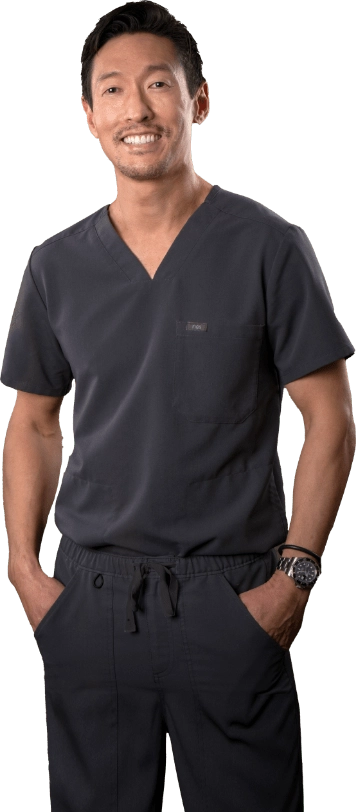
Samuel Sohn, MD
Dr. Samuel M. Sohn is a plastic surgeon board-certified by the American Board of Plastic Surgery and an active member of the American Society of Plastic Surgeons. He completed a competitive aesthetic surgery fellowship at the New York Eye and Ear Infirmary of Mount Sinai after residency training in general and plastic surgery at Michigan State University, and he has been recognized as a training physician for advanced liposculpture techniques. His work has been published in multiple peer-reviewed journals.
What that translates to for eyelid patients is a surgeon who thinks about the eye as part of the whole face and about tissue as something to preserve when possible, not just remove. Every eyelid consultation includes an assessment of brow position, midface support, and lid-cheek continuity, so the recommendation is honest about whether an eyelid lift alone will get you the result you want, or whether a brow lift, a facelift or neck lift, or a combined plan would serve you better. If a smaller procedure can accomplish your goals, that is what Dr. Sohn will recommend.

I’m extremely happy with my surgery outcome and it’s only been one day.
Dr. Sohn made me feel very comfortable and treated me with fantastic care. I’m extremely happy with my surgery outcome and it’s only been one day. Can’t wait to see how everything looks fully recovered. Thank you Dr. Sohn I will absolutely be recommending you to others!


Patient Gallery
Patient Gallery
View Our Patient Gallery
FAQs About Blepharoplasty
Modern eyelid lifts preserve or reposition orbital fat instead of aggressively removing it, particularly in the lower lid. Older techniques focused on excising fat and skin, which reliably reduced bags in the short term but often produced a hollowed-out look 10 or more years later, once facial fat naturally declined further. Fat-repositioning lower blepharoplasty smooths the tear trough using the patient’s own tissue, so the improvement ages more naturally.
Visible scars are unusual after eyelid surgery. Upper-lid incisions are placed inside the natural crease so they are hidden when the eye is open. Lower-lid incisions are most often placed inside the eyelid (transconjunctival) and leave no external mark; when a subciliary incision is used, it sits just below the lash line and typically fades to a fine line that is difficult to see after several months.
Most patients return to non-strenuous work and daily activities within seven to 10 days. Bruising and swelling improve most rapidly in the first two weeks, with continued softening over the following month. Final refinement of scars and residual swelling takes three to six months. Strenuous exercise and heavy lifting are typically avoided for about three weeks.
Upper eyelid surgery can restore peripheral vision when hooded upper-lid skin has been physically blocking the outer edge of your visual field. This functional improvement is documented by a visual field test before surgery, which can also matter for insurance coverage. Lower eyelid surgery is aesthetic and does not affect vision.
Cosmetic eyelid surgery is generally not covered. Upper eyelid surgery may qualify as a medically necessary procedure when severe upper-lid hooding is measurably obstructing vision, usually confirmed by photographs and a documented visual field test. Insurance authorization must be obtained before surgery, and criteria vary by carrier. Lower eyelid surgery is almost always considered cosmetic and is not covered.
Yes, combining an eyelid lift with a brow lift or a facelift or neck lift is common when multiple areas contribute to a tired or aged look. Combining procedures in one anesthetic can reduce total downtime compared to staged procedures, but candidacy depends on your health, your anatomy, and the extent of each planned procedure. Dr. Sohn will discuss what makes sense during your consultation.

Schedule Your Consultation
If you are considering an eyelid lift in Tampa, Clearwater, or St. Petersburg, the first step is a consultation with Dr. Sohn. He will review your goals, examine your lid anatomy, brow position, and midface support, and explain honestly whether an eyelid lift, a combined procedure, or something else is the right recommendation for you. Request a consultation to get started.
- American Society of Plastic Surgeons. 2023 Procedural Statistics Report. Available at: https://www.plasticsurgery.org/news/press-releases/plastic-surgery-sees-steady-growth-amidst-economic-uncertainty-american-society-of-plastic-surgeons-2023-procedural-statistics-report-finds. Accessed July 2026. Supports: 120,747 blepharoplasty procedures in 2023, top-5 cosmetic surgical procedure.
- American Society of Plastic Surgeons. Eyelid Surgery Candidates. Available at: https://www.plasticsurgery.org/cosmetic-procedures/eyelid-surgery/candidates. Accessed July 2026. Supports: candidacy criteria (healthy, nonsmoker, realistic expectations, no serious eye conditions).
- Prischmann J, Sufyan A, Ting JY, Ruffin C, Perkins SW. Dry eye symptoms and chemosis following blepharoplasty: a 10-year retrospective review of 892 cases in a single-surgeon series. JAMA Facial Plast Surg. 2013;15(1):39-46. DOI: 10.1001/2013.jamafacial.1. Supports: dry eye incidence 26.5%, chemosis 26.3%, elevated risk with concurrent upper/lower blepharoplasty and preoperative eyelid laxity.
- Chen J, Wu Y, Wang Y, Zhang B, Tang J, Wang Z, Huang W, Cheng B. Transconjunctival Fat Repositioning Blepharoplasty: Is Excess Fat Herniation a Prerequisite? Plast Reconstr Surg. 2023;153(5):1039-1046. DOI: 10.1097/PRS.0000000000010726. Supports: >85% tear trough deformity resolution in 232-patient series, high FACE-Q satisfaction. Framing note: single-surgeon technique series.
- Pack S, Quereshy FA, Altay MA, Baur DA. Transconjunctival Lower Blepharoplasty. Atlas Oral Maxillofac Surg Clin North Am. 2016;24(2):147-51. DOI: 10.1016/j.cxom.2016.05.011. Supports: transconjunctival approach description for lower blepharoplasty.
- Oke I, Elze T, Miller JW, Lorch AC, Hunter DG, Freitag SK, Dagi LR. The Incidence of Strabismus After Upper and Lower Blepharoplasty in the United States. Ophthalmic Plast Reconstr Surg. 2024;40(4):449-452. DOI: 10.1097/IOP.0000000000002617. Supports: strabismus incidence data (1.5% upper vs 2.0% lower, 3-year), 368,623-patient registry.
- Blanch A, Zingarello V, Young K, Rodriguez-Baeza A, Vaienti L, Riccardi F. Single access upper blepharoplasty and lower lid lateral fat pad removal: A proven technique with low recurrence rate. J Plast Reconstr Aesthet Surg. 2022;75(11):4297-4303. DOI: 10.1016/j.bjps.2022.08.020. Supports: single-access combined upper/lower blepharoplasty technique described.
- Mayo Clinic. Blepharoplasty. Available at: https://www.mayoclinic.org/tests-procedures/blepharoplasty/about/pac-20385174. Accessed July 2026. Supports: general procedure definition for lay audience.
- Kossler AL, Peng GL, Yoo DB, Azizzadeh B, Massry GG. Complications of Blepharoplasty: Prevention and Management. Plast Surg Int. 2012. Available at: https://www.ncbi.nlm.nih.gov/pmc/articles/PMC3357590/. Supports: complication profile including lagophthalmos, dry eye management. Note: source retained from prior version of page; supplement with newer references where possible.
Dr. Samuel Sohn has reviewed and approved this content.
Page Updated: