Understanding Breast Ptosis: Grades and Causes
Breast sagging occurs in varying degrees, and understanding your specific situation helps determine the best surgical approach.
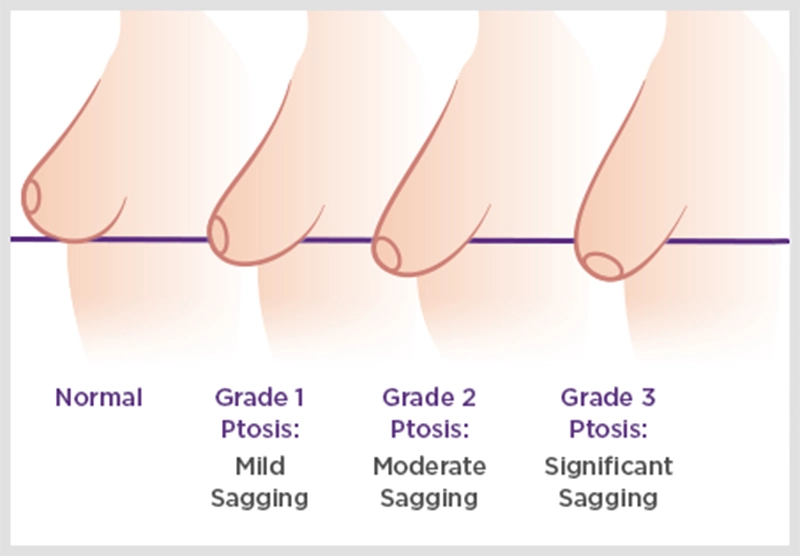
The Three Grades of Breast Ptosis
Grade 1 (Mild Ptosis): The nipple sits at or slightly below the inframammary fold (the natural crease beneath the breast). Mild sagging may be addressed with augmentation alone or a minimal-lift technique.
Grade 2 (Moderate Ptosis): The nipple falls noticeably below the inframammary fold, and there is visible loss of upper breast fullness. This is the most common presentation and typically requires a standard breast lift combined with implants.
Grade 3 (Severe Ptosis): The nipple points downward, and the breast hangs significantly below the fold. Severe ptosis requires more extensive lifting techniques and often benefits most from augmentation mastopexy.
Common Causes of Breast Sagging
- Pregnancy and breastfeeding: Hormonal changes and milk production stretch breast ligaments and skin
- Weight loss: Significant weight reduction can leave excess skin and reduced breast volume
- Aging: Natural loss of skin elasticity and collagen over time
- Genetics: Some individuals are predisposed to earlier or more pronounced sagging
- Gravity and lifestyle: Years of impact from exercise or lack of proper support can accelerate ptosis
Implant Options: Saline vs. Silicone
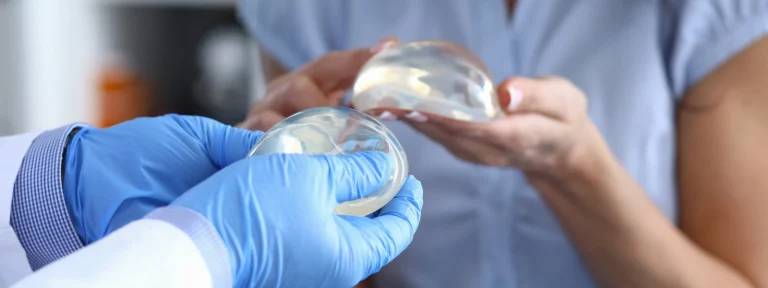
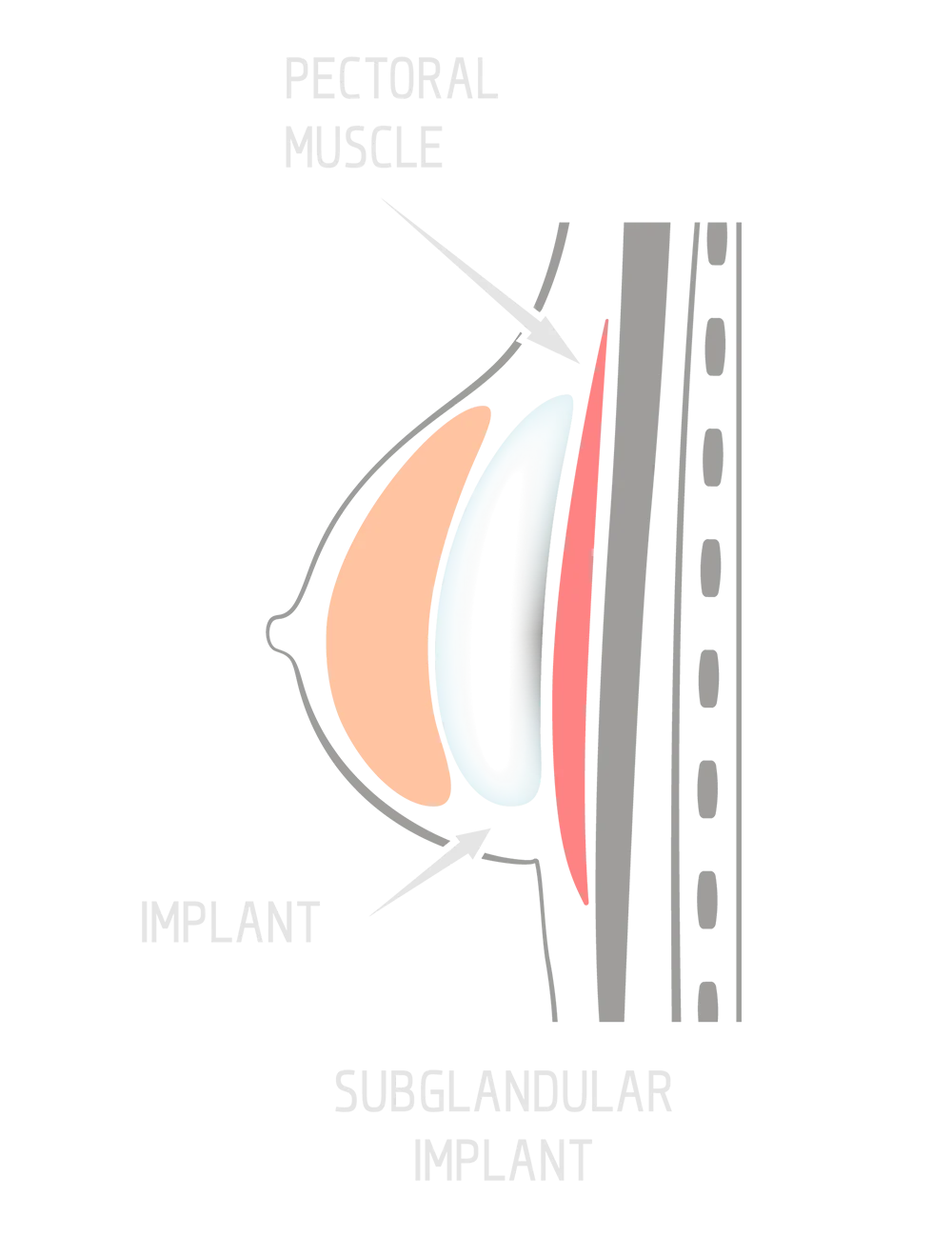
Choosing the right breast implant type is a crucial decision. Both saline and silicone implants are FDA-approved and safe, but they differ in feel, appearance, and maintenance.
Saline Implants
Composition: Sterile saltwater solution in a silicone shell
Advantages:
- Smaller incision required for insertion
- If rupture occurs, saline is safely absorbed by the body
- Adjustable volume during surgery for precise sizing
- Generally lower cost
Disadvantages:
- May feel less natural than silicone
- More prone to rippling, especially in thin-skinned patients
- Require replacement if rupture occurs
- May be more noticeable in certain positions
Silicone Implants
Composition: Silicone gel in a silicone shell
Advantages:
- Feel more natural and closely mimic breast tissue
- Less prone to rippling
- Better aesthetic results in thin-skinned patients
- Cohesive gel formulation (modern implants) maintains shape even if shell ruptures
Disadvantages:
- Slightly larger incision required
- Rupture may not be immediately apparent; regular monitoring recommended
- Generally higher cost
- Require MRI screening every 3 years to monitor for silent rupture
Dr. Sohn’s Recommendation:
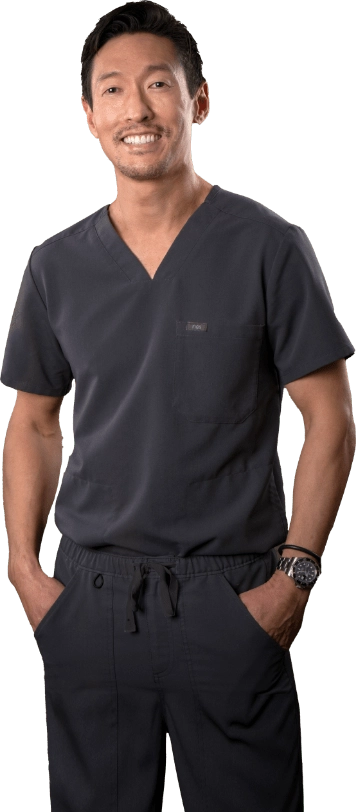
The best implant choice depends on your anatomy, skin thickness, aesthetic goals, and personal preferences. During your consultation, Dr. Sohn will discuss which option aligns best with your desired outcome.
Complementary Procedures
Many patients combine a breast lift with implants with other cosmetic procedures for comprehensive body rejuvenation. Popular combinations include:
Credentials and Training
- Board Certification: American Board of Plastic Surgery
- Medical Degree: Medical College of Virginia/Virginia Commonwealth University School of Medicine
- Residency: General and plastic surgery training at Michigan State University
- Fellowship: Fellowship-trained in Aesthetic Surgery at the New York Eye and Ear Infirmary
- Professional Memberships: American Society of Plastic Surgeons (ASPS)
- Experience: Over 20 years of surgical experience in Las Vegas and the Tampa Bay area
- Hospital Affiliations: HCA Florida South Tampa Hospital
Dr. Sohn’s Philosophy
“Every patient deserves personalized care that respects their unique anatomy and aesthetic vision. My goal is to enhance your natural beauty while maintaining harmony with your overall appearance.” — Dr. Samuel Sohn, MD
Dr. Sohn believes that successful cosmetic surgery requires understanding each patient’s individual goals, anatomy, and lifestyle. He takes time during consultations to listen, educate, and develop customized surgical plans that deliver results you’ll love for years to come.




 Trusted Source